


Gender equality, and placing diverse women’s voices, experiences and expertise at the centre of our security and peace work supports long term commitment to conflict prevention and sustainable peace.
Published
What do peace and security mean to diverse Women in Australia
Consultation with, and the leadership of, women and gender diverse people is a fundamental underpinning of the WPS agenda. Action to secure peace and security is strengthened when it draws from diverse knowledge, perspectives, and experiences, and the Australian Government has explicitly committed to support women and girls’ capacity to speak out, be heard, innovate, and drive change.

Civil Society Engagement Adviser
Tim Anderson
The ACFID seconded Civil Society Engagement Adviser to the Australian Civil-Military Centre contributes to the advancement of national capabilities to prevent, prepare for and respond more effectively to humanitarian crises through advancements in civil-military-police engagement. Building upon the partnership approach to civil-military-police engagement, the Civil Society Engagement Advisor convenes, facilitates dialogue, and provides policy advice to the stakeholder networks of both ACFID and the ACMC to strengthen understanding of the role, mandate and guiding principles of NGO engagement in humanitarian action.
Published
Conflict-related Sexual and Gender-based Violence
An introductory overview to support prevention and response efforts.
Published
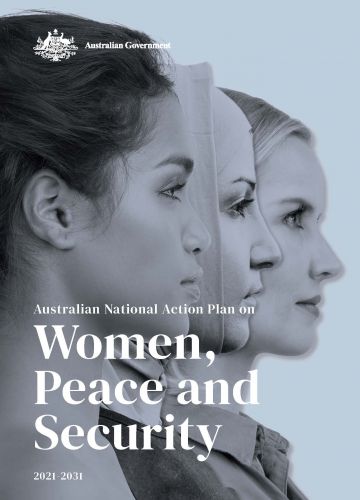
Australian National Action Plan on Women, Peace and Security 2021-2031
We need the powerful outcomes generated by the United Nations Security Council’s Women, Peace and Security agenda to assist us as we reconstitute our societies and institutions, and as we resist the temptation to allow conflict to take root in the uncertainty we are all facing.
Published
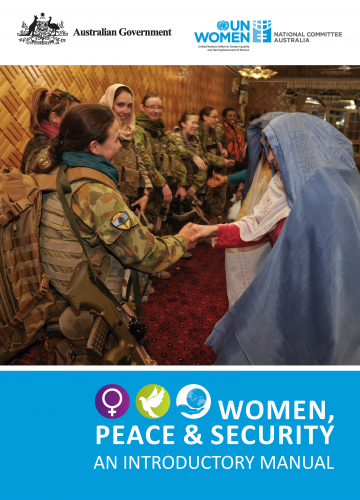
Women, Peace and Security: An Introductory Manual
Women’s leadership and collective action have changed the world by combatting violence against women and building equality. Women’s leadership is central to reconciliation and conflict resolution and to peacebuilding efforts that bring results for families and communities.

Article date
The inaugural online learning course on Women, Peace and Security has been launched on the ACMC Learning Hub.
Article date
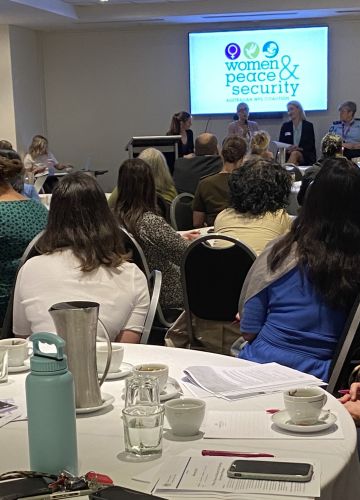
ACMC supported the Women, Peace and Security (WPS) Civil Society-Government Dialogue, in partnership with DFAT and the Australian Civil Society Coalition for WPS.
Published
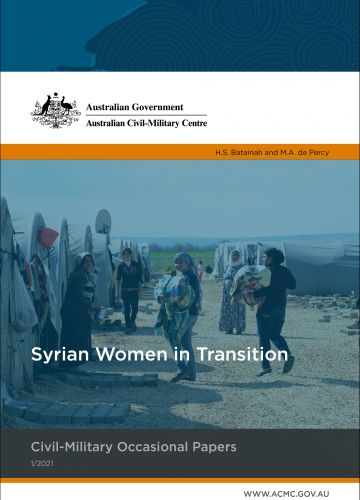
Syrian Women in Transition Civil-Military Occasional Papers 1/2021
This paper presents a snapshot of what it is like to be a Syrian woman in transition in Jordan or Lebanon. In 2019 we investigated the lives of these women to find out what challenges they face and the conditions, policies and structures that help or hinder their opportunities.
Published
Gendered Crises, Gendered Responses
The Necessity and Utility of a Gender Perspective in Armed Conflicts and Natural Disasters: An Introductory Overview.