


Humanitarian action involves immediate emergency actions that address significant needs for protection, health, water, hygiene and sanitation that emerge as a result of either a conflict or disaster.
Published
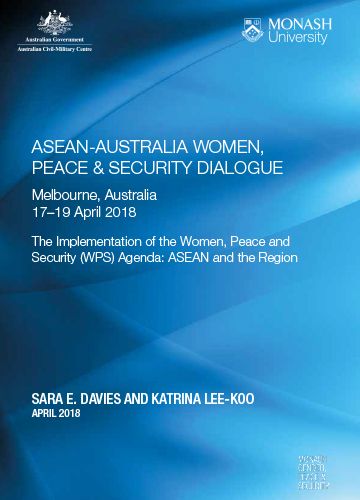
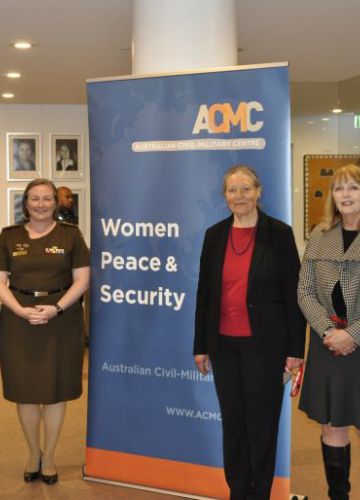
ASEAN-Australian Women, Peace and Security Dialogue
The United Nations’ Women, Peace and Security (WPS) agenda has emerged over the past decade and a half as a significant cross-cutting thematic program for achieving global peace and security.
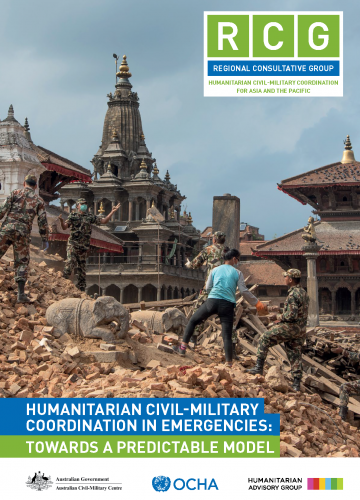
Humanitarian Civil-Military Coordination in Emergencies: Towards a predictable Model
A focus on the coordination of operational planning between civilian and military actors in priority countries in the region–Bangladesh, Nepal, Indonesia, Myanmar and the Philippines.
Article date
The Australian Civil-Military Centre (ACMC) is following whole-of-government guidance from the Australian Department of Health and the Prime Minister’s Office in relation to COVID-19, and is monitoring the situation with a priority on the health and wellbeing of its staff and of the general community.
Article date
Public servants from the Australian and New Zealand governments, and civil society personnel attended the two-day Civil-Military-Police Interaction Workshop (CMPIW) in Canberra on 18 and 19 June. The aim of the CMPIW was to build capacity and knowledge among mid-career professionals by exposing delegates to a range of tools, exercises and case studies on civil-military-police coordination.
Published
Skills for Multiagency Responses to International Crises
Australian responses to international, complex emergencies and humanitarian crises, generated by natural disaster, conflicts or incidents, demand the coordinated responses of multiple civil-military-police actors and agencies.
Article date
April of this year (2022) marks the first anniversary of Australia's Second Women, Peace and Security Nationa
Article date
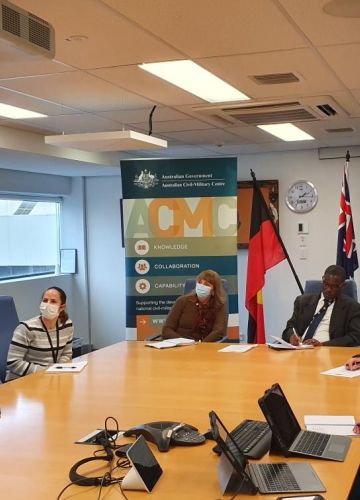
The Australian Civil-Military Centre (ACMC), United Nations Office for the Coordination of Humanitarian Affairs (UN OCHA) and the US Centre for Excellen
Article date
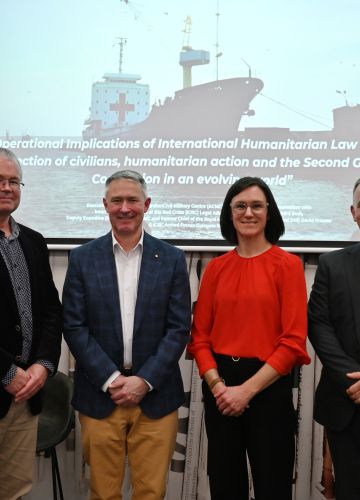
On 23 September 2024, ICRC and ACMC hosted a panel discussion on how to protect civilians at sea during times of conflict.
ACMC Executive Directive Nicola Rosenblum moderated the panel, which included ACMC Deputy Executive Director and former Chief of the Royal New Zealand Navy, Rear Admiral (rtd) David Proctor, ICRC Regional Maritime Legal Adviser Andre Smit and ICRC Regional Delegate to the Armed Forces, Snowy Lintern.