


Gender equality, and placing diverse women’s voices, experiences and expertise at the centre of our security and peace work supports long term commitment to conflict prevention and sustainable peace.

Article date
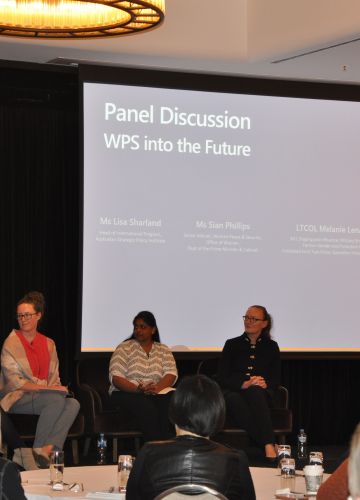
The inaugural online learning course on Women, Peace and Security has been launched on the ACMC Learning Hub.
Article date
In April 2019 the Australian Civil-Military Centre launched its ‘Women, Peace and Security’ online course.
Published
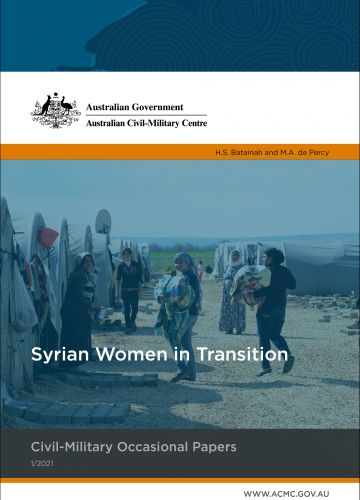
Syrian Women in Transition Civil-Military Occasional Papers 1/2021
This paper presents a snapshot of what it is like to be a Syrian woman in transition in Jordan or Lebanon. In 2019 we investigated the lives of these women to find out what challenges they face and the conditions, policies and structures that help or hinder their opportunities.
Article date
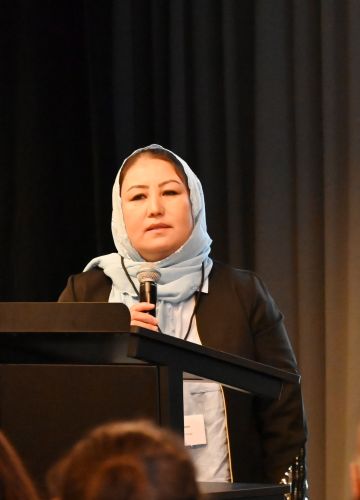
The annual Women, Peace and Security (WPS) Dialogue was held on 19 February 2025 in Canberra. Around 100 representatives from civil society and the Australian Government
Published
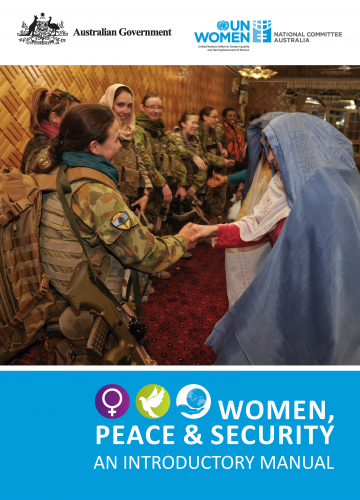
Women, Peace and Security: An Introductory Manual
Women’s leadership and collective action have changed the world by combatting violence against women and building equality. Women’s leadership is central to reconciliation and conflict resolution and to peacebuilding efforts that bring results for families and communities.
Article date
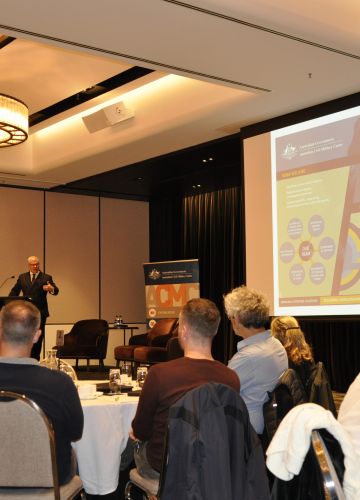
Public servants from the Australian and New Zealand governments, and civil society personnel attended the two-day Civil-Military-Police Interaction Workshop (CMPIW) in Canberra on 18 and 19 June. The aim of the CMPIW was to build capacity and knowledge among mid-career professionals by exposing delegates to a range of tools, exercises and case studies on civil-military-police coordination.
Published
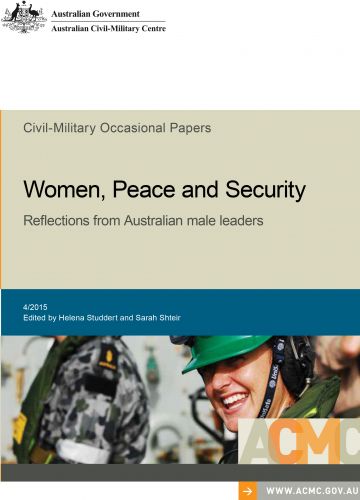
Women, Peace and Security: Reflections from Australian male leaders
Moving past the theoretical by drawing together the real-life experiences, reflections and lessons of male leaders from the Australian Defence Force, the Australian Federal Police and civilians.
Published
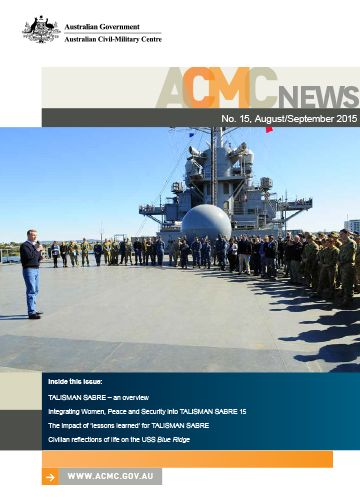
TALISMAN SABRE – an overview
The past decade of operations has taught us that in order to more effectively respond to complex international crises, it is necessary for civil, military and police actors to understand each other and work together in a comprehensive ma