


Humanitarian action involves immediate emergency actions that address significant needs for protection, health, water, hygiene and sanitation that emerge as a result of either a conflict or disaster.
Article date
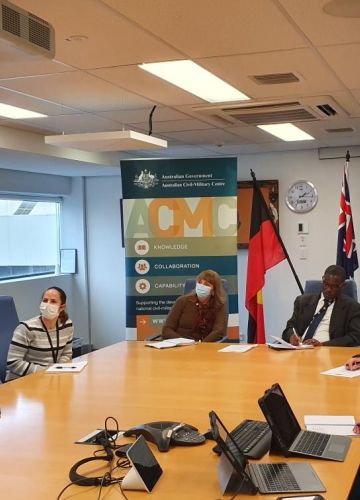
The Australian Civil-Military Centre (ACMC), United Nations Office for the Coordination of Humanitarian Affairs (UN OCHA) and the US Centre for Excellen
Article date
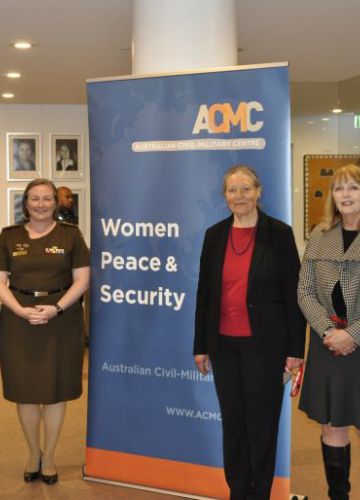
April of this year (2022) marks the first anniversary of Australia's Second Women, Peace and Security Nationa
Published
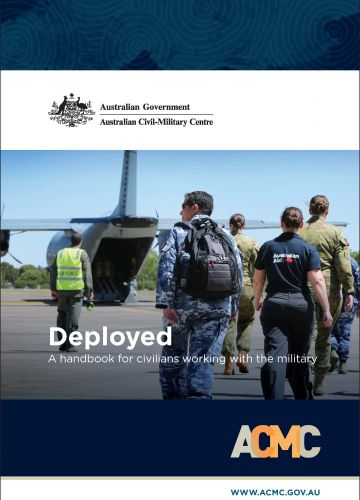
Deployed - A handbook for civilians working with the military
This brief publication is an introduction to the complex business of civil-military-police integration. Hopefully, you will read it prior to an exercise, not an operation. But in either case it provides good advice. Many people have gone where you are going, and this is the distillation of their experience.
Published
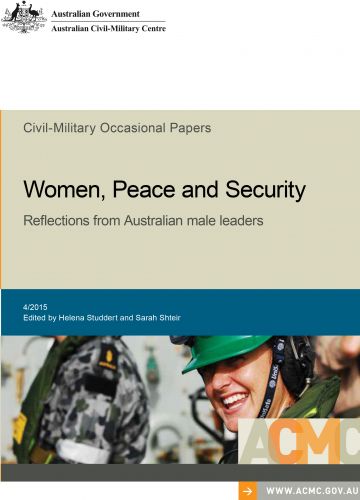
Women, Peace and Security: Reflections from Australian male leaders
Moving past the theoretical by drawing together the real-life experiences, reflections and lessons of male leaders from the Australian Defence Force, the Australian Federal Police and civilians.
Article date
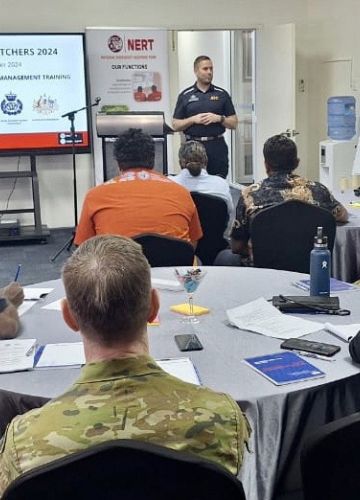
The EOC Management Training involved 35 participants from a range of Solomon Islands agencies, including the NDMO and Royal Solomon Islands Police Force.
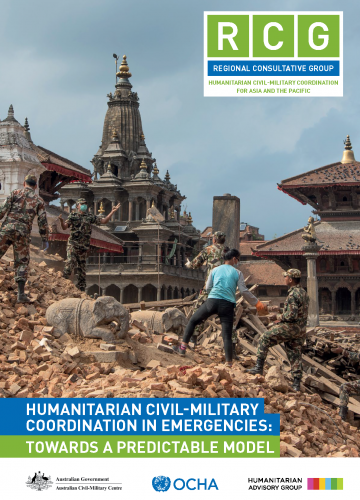
Humanitarian Civil-Military Coordination in Emergencies: Towards a predictable Model
A focus on the coordination of operational planning between civilian and military actors in priority countries in the region–Bangladesh, Nepal, Indonesia, Myanmar and the Philippines.
Quick Impact Workshop – Outcomes Post Tropical Cyclone Pam Roundtable with Civil Society
Tropical Cyclone Pam hit Vanuatu and surrounds in March 2015. The Department of Foreign Affairs and Trade (DFAT) led the Australian response, which also involved significant Defence engagement and the substantial use of military assets.
Article date
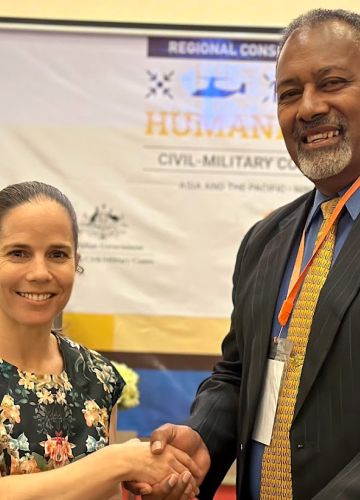
ACMC is the co-secretariat of RCG, along with the United Nations Office for the Coordination of Humanitarian Affairs and the US Centre for Excellence in Disaster Management and Humanitarian Assistance.
Published
Civil-Military-Police Coordination in Disaster Management: Perspectives from South East Asian countries Research paper and Stakeholder Guide
Responders to natural disasters face increasingly complex operating environments, characterised by new challenges and new actors. Global trends that are overwhelming the international humanitarian system come into sharp focus in South-East Asia.