A study commissioned by the Australian Civil-Military Centre and conducted by the Institute for Social Science Research at the University of Queensland
The Directorate of Partnerships and Preparedness builds and fosters relationships with government and non-government stakeholders, using the work of ACMC to influence better policy and advocate for civil-military collaboration in that community.
These Policy Proposals are the product of a three-year Australian Research Council-funded project on ‘Strengthening the Rule of Law through the UN Security Council’.
The United Nations’ Women, Peace and Security (WPS) agenda has emerged over the past decade and a half as a significant cross-cutting thematic program for achieving global peace and security.
A focus on the coordination of operational planning between civilian and military actors in priority countries in the region–Bangladesh, Nepal, Indonesia, Myanmar and the Philippines.
Responders to natural disasters face increasingly complex operating environments, characterised by new challenges and new actors. Global trends that are overwhelming the international humanitarian system come into sharp focus in South-East Asia.
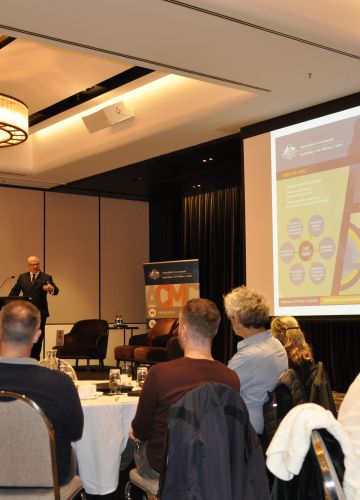
Public servants from the Australian and New Zealand governments, and civil society personnel attended the two-day Civil-Military-Police Interaction Workshop (CMPIW) in Canberra on 18 and 19 June. The aim of the CMPIW was to build capacity and knowledge among mid-career professionals by exposing delegates to a range of tools, exercises and case studies on civil-military-police coordination.
The purpose of this report is to identify the lessons learned and emerging best practices of UN Member States committed to the implementation of this agenda through National Action Plans (NAPs).
This document affirms the principles that guide the Australian Government and its stakeholders in international multiagency response efforts. It captures the best of the learning that has come from the Australian experience of contemporary operations overseas.