
The CMPW-POC is a two-day workshop that will focus on the Protection of Civilians during international and domestic crises. With the changes in nature of
conflict, the increasing severity and frequency of sudden-onset disasters, more attention needs to be paid to understanding how government, humanitarian actors
and civil society can best protect civilians. The workshop features a series of lectures, panel discussions and activities.
Article date
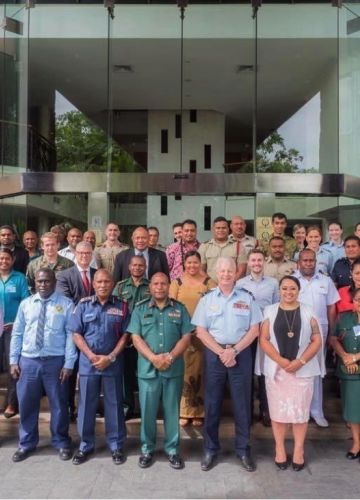
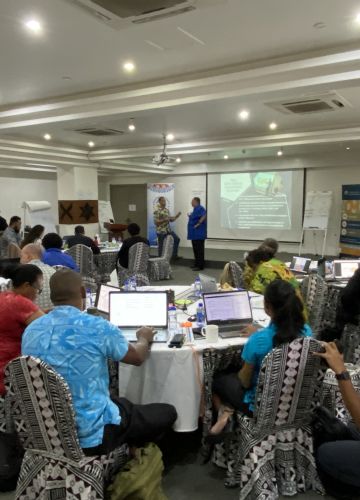
Public servants from the Australian and New Zealand governments, and civil society personnel attended the two-day Civil-Military-Police Interaction Workshop (CMPIW) in Canberra on 18 and 19 June. The aim of the CMPIW was to build capacity and knowledge among mid-career professionals by exposing delegates to a range of tools, exercises and case studies on civil-military-police coordination.
Published
Complex Emergencies in a Digital World: A Rapid Guide
The Communication and Complex Emergencies Project is a multi-phase collaboration between the University of Adelaide’s Applied Communication Collaborative Research Unit and the Australian Civil-Military Centre.
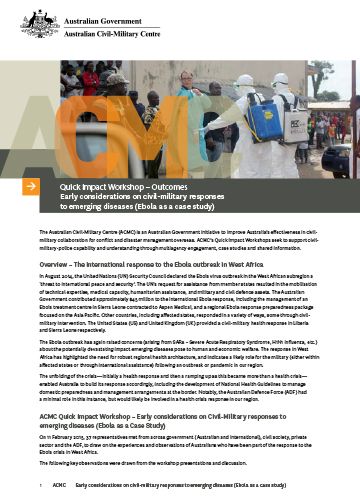
Quick Impact Workshop – Outcomes Early considerations on civil-military responses to emerging diseases - Ebola as a case study
In August 2014, the United Nations (UN) Security Council declared the Ebola virus outbreak in the West African subregion a ‘threat to international peace and security’. The UN’s request for assistance from member states resulted in the mobilisation of technical expertise, medical capacity, humanitarian assistance, and military and civil defence assets.
Published
From Principle to Practice: Protecting civilians in violent contexts
Following on from the ACMC Australian Guidelines for the Protection of Civilians (2015) this handbook aims to provide the ‘what’, the ‘why’ and the ‘how’ of protecting civilians in violent contexts and is intended for people working at the operational level including government, NGOs, UN and other organisations.
Article date
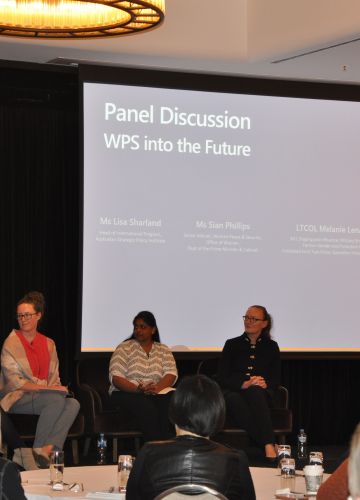
ACMC supported the Women, Peace and Security (WPS) Civil Society-Government Dialogue, in partnership with DFAT and the Australian Civil Society Coalition for WPS.
Article date
The Australian Civil-Military Centre (ACMC) is following whole-of-government guidance from the Australian Department of Health and the Prime Minister’s Office in relation to COVID-19, and is monitoring the situation with a priority on the health and wellbeing of its staff and of the general community.
Published
Australian National Action Plan on Women, Peace and Security 2012-2018
The National Action Plan sets out what Australia will do, at home and overseas, to integrate a gender perspective into its peace and security efforts, protect women and girls’ human rights, and promote their participation in conflict prevention, management and resolution. ACMC has a role in the design and implementation of this plan.
Published
Crowdsourcing and Crisis Mapping in Complex Emergencies
The Communication and Complex Emergencies Project is a multi-phase collaboration between the University of Adelaide’s Applied Communication Collaborative Research Unit and the Australian Civil-Military Centre.
Published
TALISMAN SABRE – an overview
The past decade of operations has taught us that in order to more effectively respond to complex international crises, it is necessary for civil, military and police actors to understand each other and work together in a comprehensive ma