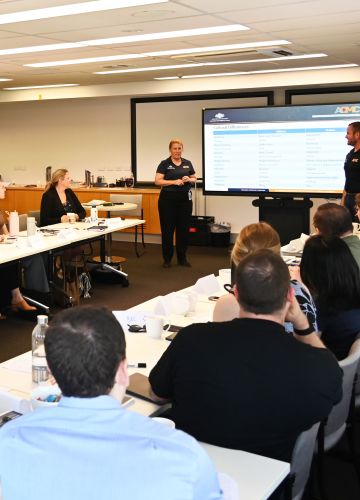

A list of United Nations Courses as part of the Interagency Training Matrix.
Article date
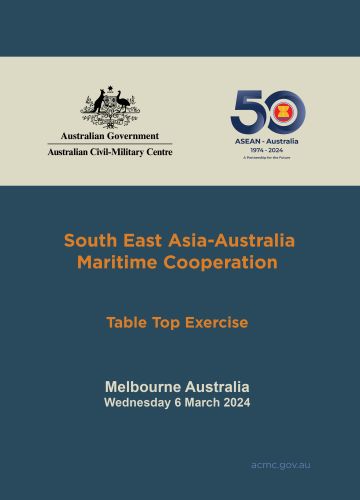
ACMC will host a maritime cooperation scenario exercise in Melbourne during the ASEAN-Australia Week.
Article date
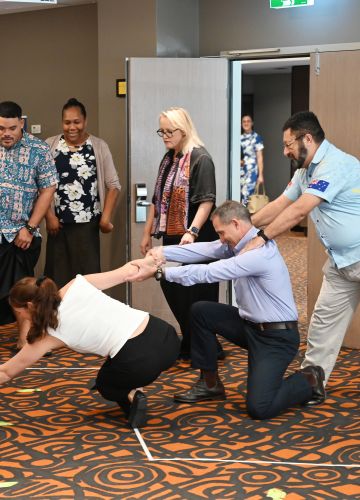
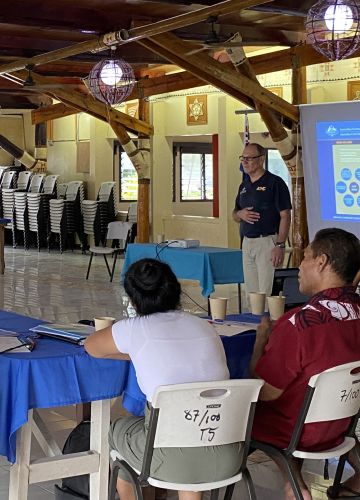
The training places participants from Australia, New Zealand, Fiji, French New Caledonia, Solomon Islands, Papua New Guinea, Tonga, Vanuatu and USA in the position of actors responding to a complex scenario involving diverse affected communities. Course participants are building their awareness of best practice civil-military coordination principles and sharing their knowledge and practical insights from previous disaster responses.
Published
Future directions in civil‑military responses to natural disasters
Over the last ten years natural disasters affected more than 2.4 billion people—the equivalent of one-third of the earth’s population—and they have wrought over $910 billion in damages—equivalent to approximately 18 percent of global GDP.
Thank you for your Interest
We are an Australian Government initiative to improve Australia’s effectiveness in civil-military-police collaboration for conflict and disaster management overseas.
Through constructive conversations, we connect with others, inspire, influence, build understanding and innovate. They are the major forum where we learn from each other, solve problems, make decisions, build relationships and take action.
Article date
ACMC has worked with Tuvaluan authorities and Australian and New Zealand stakeholders to further build Tuvalu capacity to prepare for and respond to natural disasters.
Tuvalu is particularly at risk from tropical cyclones and associated storm surges and flooding. In recent years, the Pacific Island nation has been impacted by inundation from king/spring tides (Feb 2024), Cyclone Tino (2020) and Cyclone Pam (2015).
Discuss the value of participating in preparedness and training activities.
Published
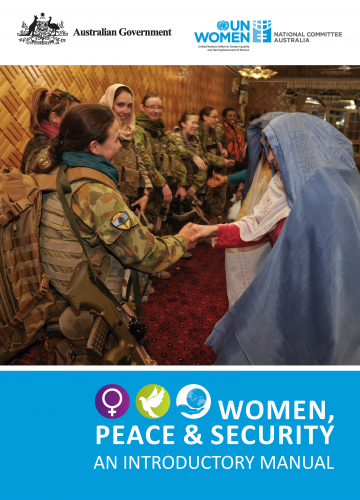
Women, Peace and Security: An Introductory Manual
Women’s leadership and collective action have changed the world by combatting violence against women and building equality. Women’s leadership is central to reconciliation and conflict resolution and to peacebuilding efforts that bring results for families and communities.