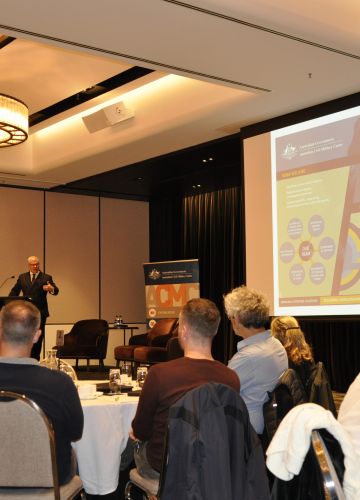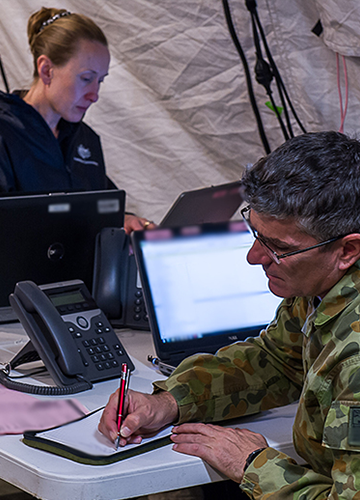

As part of an official visit organised by the International Policy Division, the ACMC was honoured to host the Royal Cambodian Armed Forces (RCAF) White Paper Team.
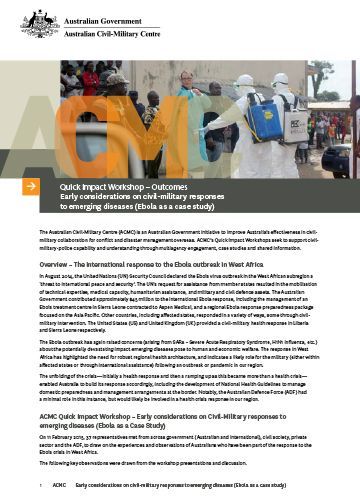
In August 2014, the United Nations (UN) Security Council declared the Ebola virus outbreak in the West African subregion a ‘threat to international peace and security’. The UN’s request for assistance from member states resulted in the mobilisation of technical expertise, medical capacity, humanitarian assistance, and military and civil defence assets.
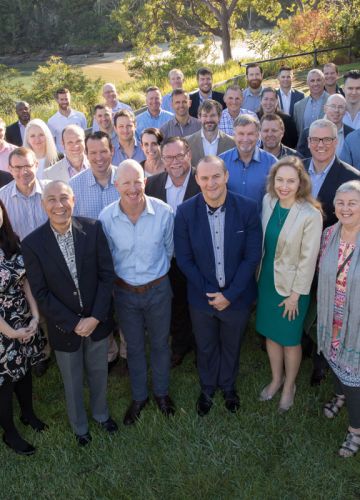
The Australian Civil-Military Centre conducted a Civil-Military Interaction Workshop (CMIW) at the Australian Institute of Police Management in Manly, New South Wales in March 2017.
Responders to natural disasters face increasingly complex operating environments, characterised by new challenges and new actors. Global trends that are overwhelming the international humanitarian system come into sharp focus in South-East Asia.
A focus on the coordination of operational planning between civilian and military actors in priority countries in the region–Bangladesh, Nepal, Indonesia, Myanmar and the Philippines.
The purpose of this report is to identify the lessons learned and emerging best practices of UN Member States committed to the implementation of this agenda through National Action Plans (NAPs).
This document affirms the principles that guide the Australian Government and its stakeholders in international multiagency response efforts. It captures the best of the learning that has come from the Australian experience of contemporary operations overseas.