Civil-Military

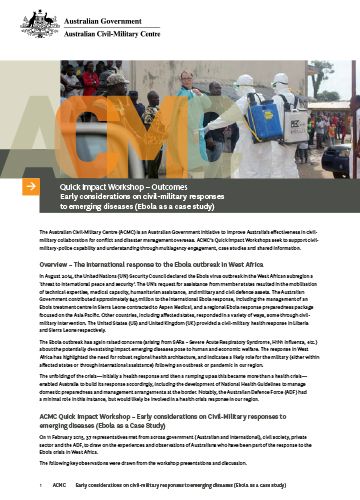
Quick Impact Workshop – Outcomes Early considerations on civil-military responses to emerging diseases (Ebola as a case study)

Quick Impact Workshop – Outcomes Early considerations on civil-military responses to emerging diseases (Ebola as a case study)

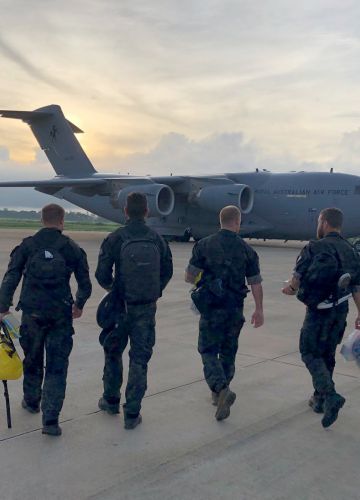
In August 2014, the United Nations (UN) Security Council declared the Ebola virus outbreak in the West African subregion a ‘threat to international peace and security’. The UN’s request for assistance from member states resulted in the mobilisation of technical expertise, medical capacity, humanitarian assistance, and military and civil defence assets.
ACMC supports disaster preparedness in Tuvalu

ACMC supports disaster preparedness in Tuvalu

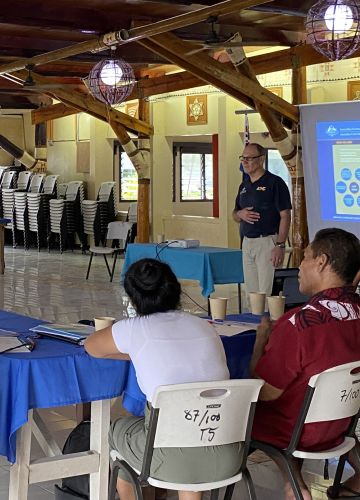
ACMC has worked with Tuvaluan authorities and Australian and New Zealand stakeholders to further build Tuvalu capacity to prepare for and respond to natural disasters. Tuvalu is particularly at risk from tropical cyclones and associated storm surges and flooding. In recent years, the Pacific Island nation has been impacted by inundation from king/spring tides (Feb 2024), Cyclone Tino (2020) and Cyclone Pam (2015).
Deepening skillsets and sharing experience at UN Civ-Mil course

Deepening skillsets and sharing experience at UN Civ-Mil course

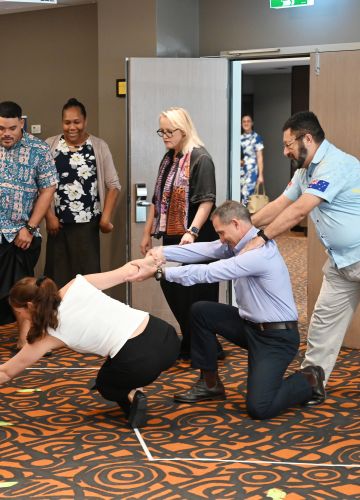
The training places participants from Australia, New Zealand, Fiji, French New Caledonia, Solomon Islands, Papua New Guinea, Tonga, Vanuatu and USA in the position of actors responding to a complex scenario involving diverse affected communities. Course participants are building their awareness of best practice civil-military coordination principles and sharing their knowledge and practical insights from previous disaster responses.
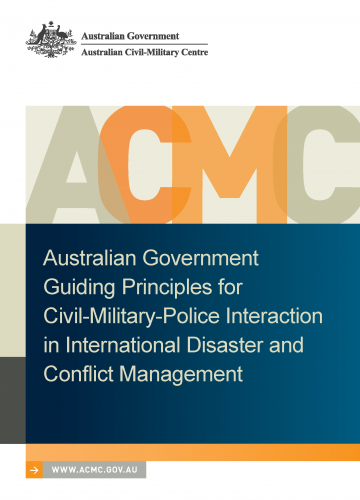
Australian Government Guiding Principles for Civil-Military-Police Interaction in International Disaster and Conflict Management

Australian Government Guiding Principles for Civil-Military-Police Interaction in International Disaster and Conflict Management

This document affirms the principles that guide the Australian Government and its stakeholders in international multiagency response efforts. It captures the best of the learning that has come from the Australian experience of contemporary operations overseas.