ACMC is the co-secretariat of RCG, along with the United Nations Office for the Coordination of Humanitarian Affairs and the US Centre for Excellence in Disaster Management and Humanitarian Assistance.
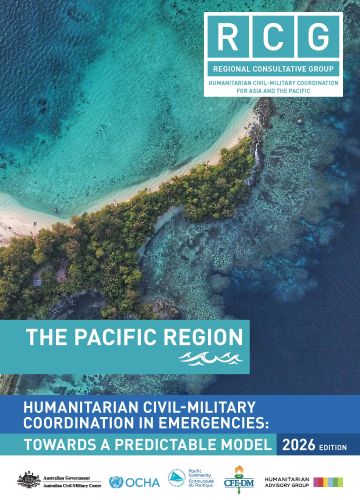
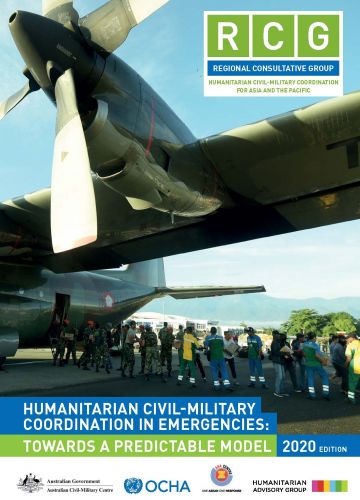
Grounded in the experience of five highly disaster-exposed countries: Fiji, Papua New Guinea, Solomon Islands, Tonga and Vanuatu, this Pacific Edition maps key civil-military coordination mechanisms at regional and national levels.
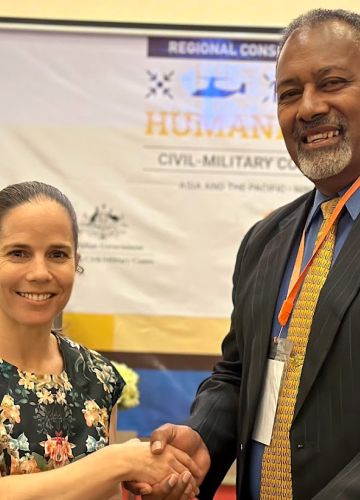
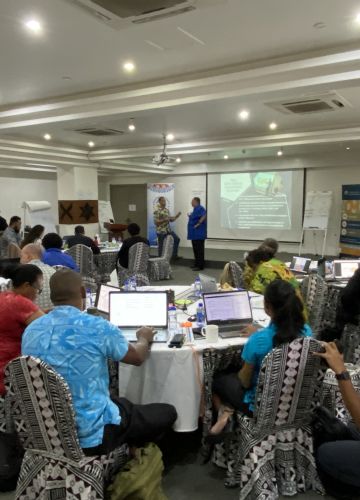
ACMC delivered a United Nations Humanitarian Civil Military Coordination (CM Coord) training course in Nadi, Fiji, along with key regional and global partners.
The Regional Consultative Group (RCG) on Humanitarian Civil-Military Coordination (CMCoord) for Asia and the Pacific is a key forum for supporting and elevating coordination, building relationships, and sharing learning to enhance and strengthen emergency response.
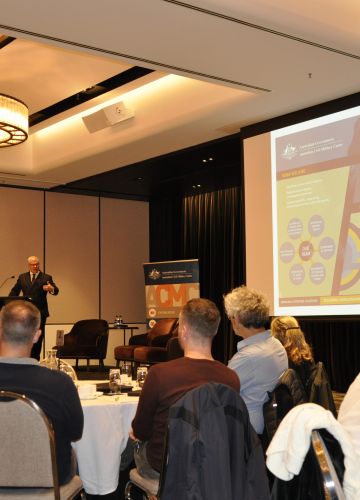
More than 60 participants from across government agencies and civil society considered a range of issues such as how gender impacts protection, the particular risks in urban and maritime warfare, the humanitarian consequences of mis and disinformation, and how cultural property can be better protected.
The CMPW-POC is a two-day workshop that will focus on the Protection of Civilians during international and domestic crises. With the changes in nature of
conflict, the increasing severity and frequency of sudden-onset disasters, more attention needs to be paid to understanding how government, humanitarian actors
and civil society can best protect civilians. The workshop features a series of lectures, panel discussions and activities.
Public servants from the Australian and New Zealand governments, and civil society personnel attended the two-day Civil-Military-Police Interaction Workshop (CMPIW) in Canberra on 18 and 19 June. The aim of the CMPIW was to build capacity and knowledge among mid-career professionals by exposing delegates to a range of tools, exercises and case studies on civil-military-police coordination.